


A Franciscan Gospel Reflection for the Fifth Sunday of Easter 2026 is shared here for your prayer. What are some of the ways you are experiencing absence of significant people in your life?
The Gospel background and reflection questions are prepared and distributed by Franciscan Sister of Christian Charity Sister Anne Marie Lom, OSF and Joe Thiel, as edited from Reflections authored by Fr. Paul Gallagher, OFM. The excerpts from the Sunday readings are prepared by Joe Thiel. To read or download the complete pdf with excerpts for your prayer, please click here: franciscan gospel reflection may 3 2026
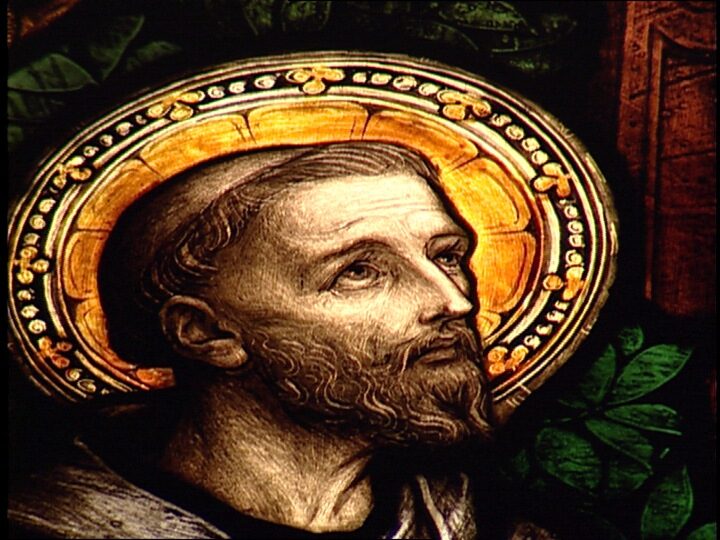
Photos: Franciscan Sisters of Christian Charity St. Francis Chapel, St. John the Baptist Catholic Church, Howard, Wisconsin
John 14:1-12
Jesus said to his disciples: “Do not let your hearts be troubled. You have faith in God; have faith also in me. In my Father’s house there are many dwelling places. If there were not, would I have told you that I am going to prepare a place for you? And if I go and prepare a place for you, I will come back again and take you to myself, so that where I am you also may be. Where I am going you know the way.”
Thomas said to him, “Master, we do not know where you are going; how can we know the way?” Jesus said to him, “I am the way and the truth and the life. No one comes to the Father except through me. If you know me, then you will also know my Father. From now on you do know him and have seen him.”
Philip said to him, “Master, show us the Father, and that will be enough for us.” Jesus said to him, “Have I been with you for so long a time and you still do not know me, Philip? Whoever has seen me has seen the Father. How can you say, ‘Show us the Father?’ Do you not believe that I am in the Father and the Father is in me? The words that I speak to you I do not speak on my own. The Father who dwells in me is doing his works. Believe me that I am in the Father and the Father is in me, or else, believe because of the works themselves. Amen, amen, I say to you, whoever believes in me will do the works that I do, and will do greater ones than these, because I am going to the Father.
Background:
This text begins a much larger section of John’s Gospel often referred to as “The Last Discourse.” It is an intimate address by Jesus to his disciples at the last supper before the crucifixion. Similar examples of this kind of discourse are found throughout the scriptures. The 49th chapter of Genesis records Jacob’s farewell, Deuteronomy chapters 31-33 record Moses’ farewell, and Paul’s farewell is found in chapter 20 of Acts. In general, these discourses begin with a prediction of approaching death, then offer encouragement to the speaker’s disciples, and then exhort the disciples to pass on their instruction to others who will come later.
Here, Jesus is reassuring the disciples before his departure. He seeks to calm their fear by encouraging them to trust in God’s protection. He does not disguise the reality of his impending departure, but reframes it in terms of going to prepare a place for them with God. He then tells them that when he returns, they (Jesus, the disciples, and God) will be reunited. It is ambiguous whether this reunion will be at the resurrection or in the final age.
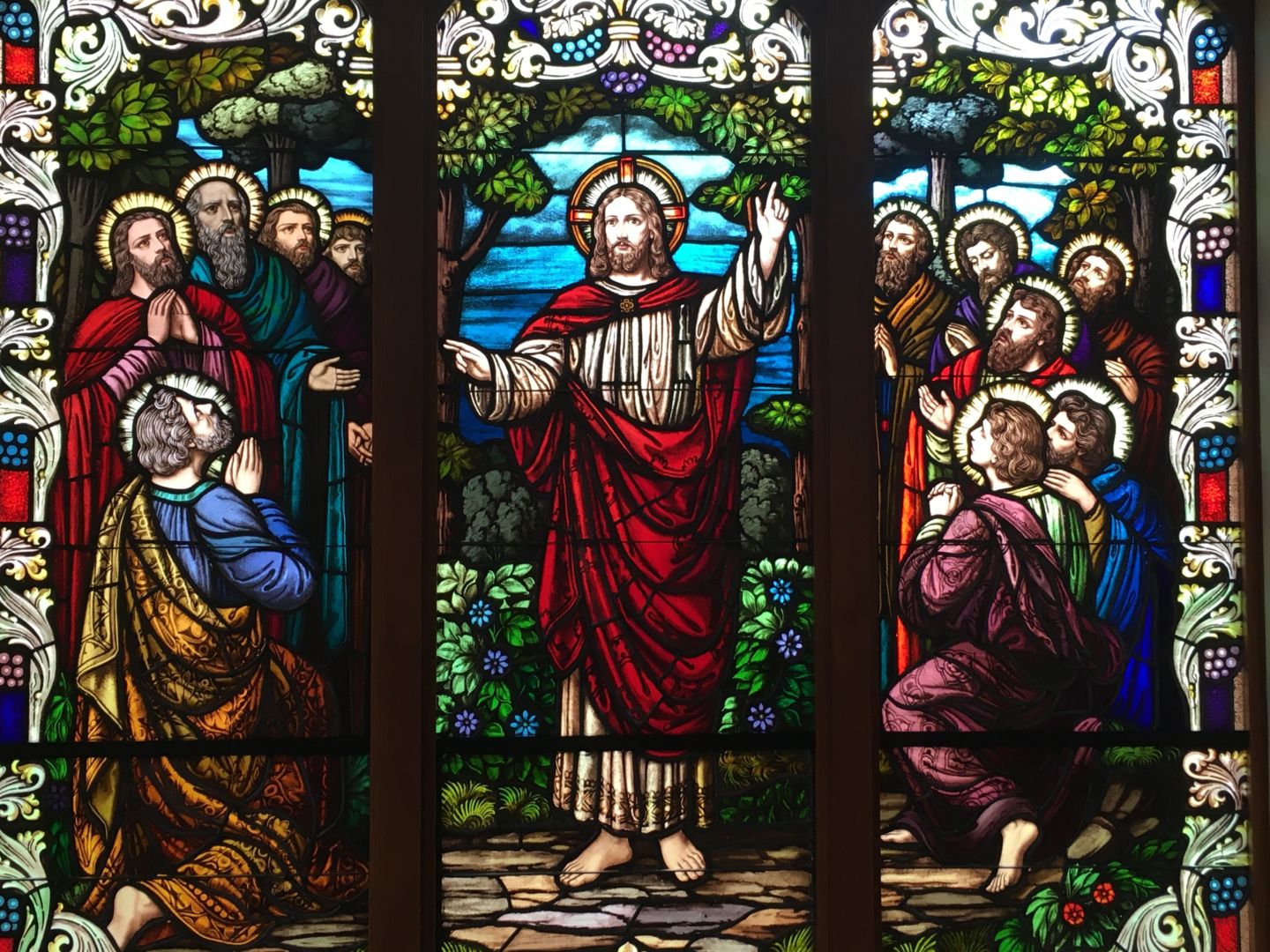
This text, and John’s Gospel in general, portrays Thomas as the one who questions Jesus and what he is trying to teach them. Philip, too, has a special relationship with Jesus in John’s Gospel. He is one of the disciples that Jesus personally invites to be a follower, and he is the disciple responsible for bringing Nathaniel to Jesus (John 1:43-48). It is Philip who Jesus asked how they might feed the multitude (John 6:5-9). When some Greeks came looking for Jesus, they approached Philip first. He and Andrew then took them to Jesus (John 12:20-22). When Philip asks Jesus to “show us the Father” in verse 8, the question should be heard as coming from someone who has a special relationship with Jesus.
In this text Jesus makes a rather bold statement that he (Jesus) is in the Father and the Father is in him. After 2,000 years of theological reflection, the contemporary Christian community may not find this kind of statement shocking. But for the early disciples, this was an extraordinary statement. In a kind of recognition of how difficult it may be to grasp what has just been stated, Jesus adds, “or else, believe because of the works themselves [that I have performed].”
John’s community would find consolation in this text. Since Jesus’ ascension, they have experienced the death of some of their members. They have been expelled from the synagogue, the place that they believed to be the center of their relationship with God, their community, and their family. Lastly, the Christian community has begun to experience persecution for their faith in Jesus. Jesus’ words would help them find a new center of meaning in him, and assure them that they did, indeed, still have a place where they could gather together with him and with God.
Reflection Questions:
- What are some of the ways you are experiencing absence of significant people in your life?
- In the opening verses, Jesus speaks of having prepared a place for you. How do you hear that statement being addressed to you?
- Given the transitions taking place in society and in the early Christian community at the time, who are some of the people that the regular early Christians might be missing by the time John is writing this Gospel?
- Given how John describes both Thomas and Philip, how do you think Thomas and Philip were feeling as they heard Jesus speaking to them?
- Thomas tells Jesus, “Master, we do not know where you are going, how we can know the way?” How do you hear these words today in your own life situation? How do you hear the words of Jesus’ reply to him?
- Jesus says to Philip: “Have I been with you for so long a time and you still do not know me, Philip?” Read these words out loud until they seem to capture the emotion of Jesus’ response to Philip. What comes across to you?
- At the end of this text Jesus says: “Amen, amen, I say to you, whoever believes in me will do the works that I do, and will do greater ones than these, because I am going to the Father.” Do you believe that what Jesus says here is true? How is it true in your own life?
- Can you take some time now to talk honestly with God about his words of reassurance to you in this Gospel? Or you might want to talk with God about the hope he has in you that you will do even greater things.
The post Fifth Sunday of Easter 2026 Franciscan Gospel Reflection appeared first on Franciscan Sisters.